EV Charger User Access Control
Invite app users, assign charger or site access, keep private and shared chargers restricted, manage RFID tokens where supported, and connect access decisions to session records.
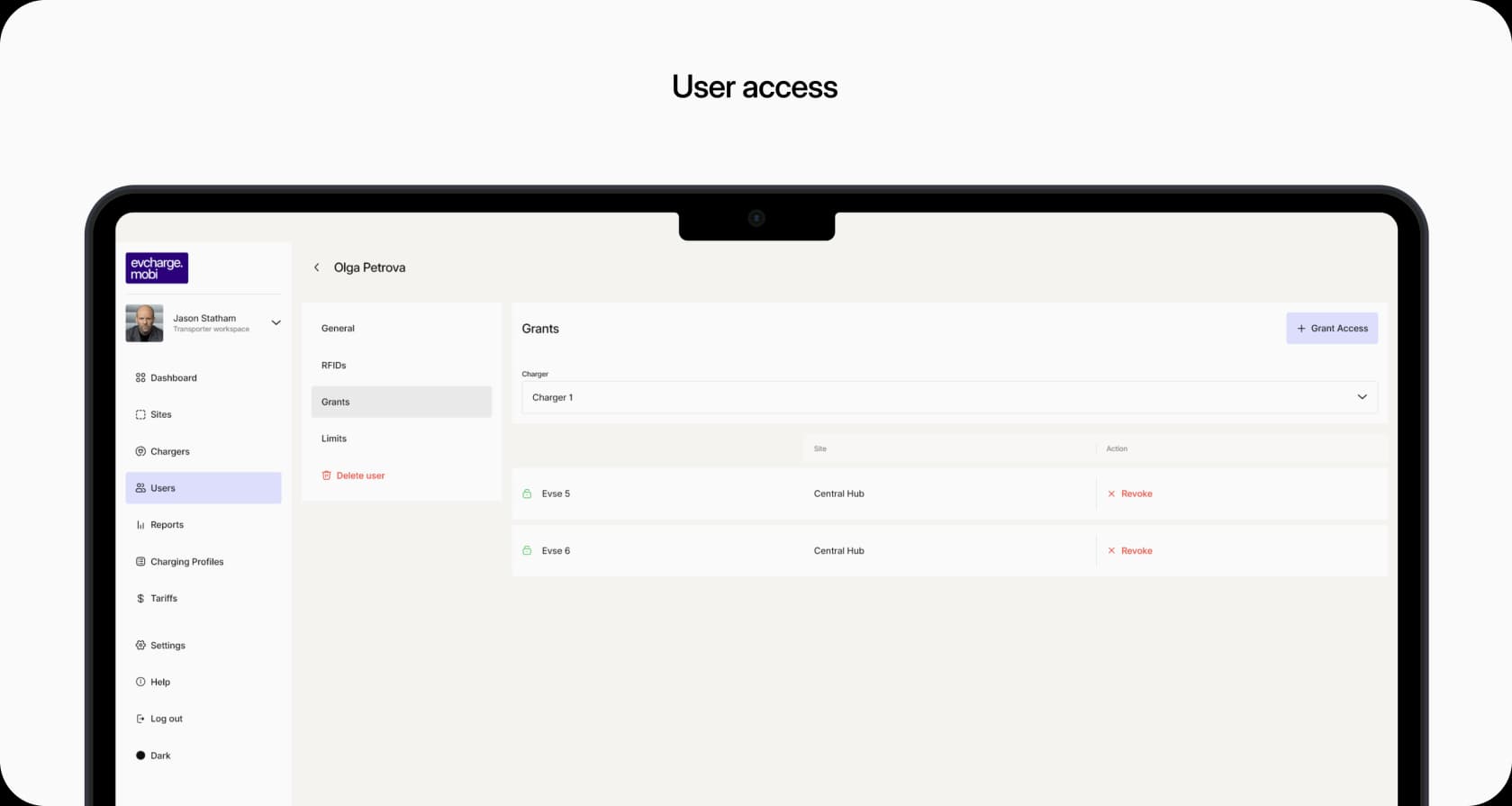
From invited driver to accountable charging session.
Access control connects the owner or operator decision with the driver account, the charger or site grant, optional RFID authorization, and the session record that follows.
Invite the app user
Add residents, employees, hotel staff, guests, tenants, private users, or operating team members to the charging setup.
Assign charger or site access
Grant access only to the chargers or locations the driver should use instead of making every charger open to everyone.
Add RFID tokens where supported
Connect RFID identifiers to the user account for compatible chargers and installations that support local or backend authorization workflows.
Connect access to reports
Use session history to understand which user, charger, connector, and tariff were involved in each charging event.
User assignments, RFID tokens, and session accountability.
The CPO Portal keeps grants and RFID tokens visible for operators, while the mobile app shows the assigned chargers a driver can actually use.
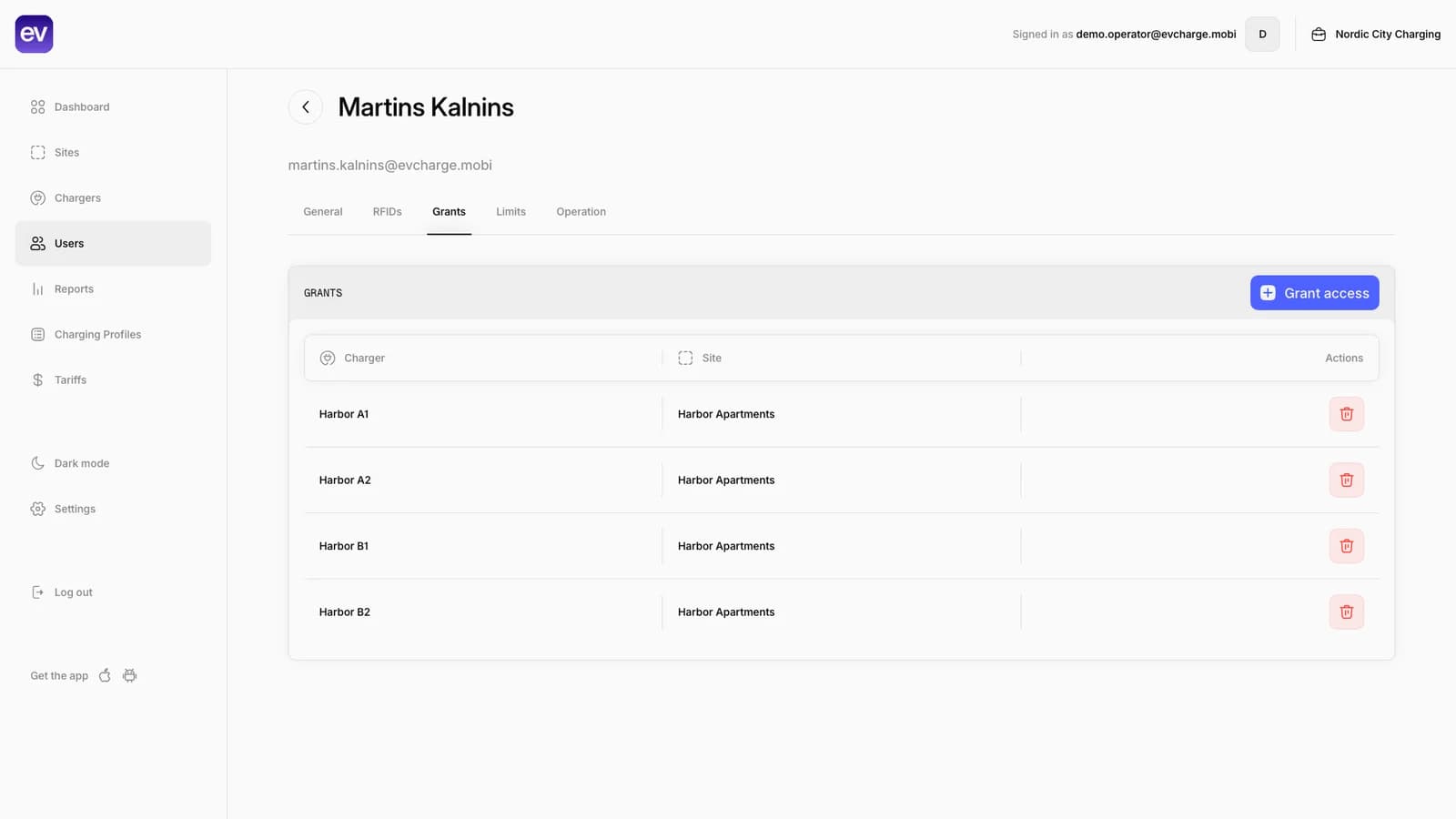
RFID tokens
Keep RFID tokens connected to user records for compatible charger authorization workflows.
Owner charger settings
Open charger settings for owner actions such as Auto charge, user management, RFID access, and charger configuration.
Driver app
See assigned chargers, public charging access, status, session totals, and recent charging history.
Reports and charts
Review filters, session totals, consumption, costs, and report charts for operator follow-up.
What access control needs before it is reliable.
Access rules are only useful when users, charger grants, optional RFID identifiers, and session data are configured around the same operating model.
- Required
Driver account for app access
Invited app-based charging needs a driver account connected to the charger or location they are allowed to use.
- Required
Charger or site assignment
Each user needs the right charger, connector, station, or site access before the private or shared charger can be used.
- When supported
RFID depends on charger support
RFID authorization needs compatible charger hardware, firmware behavior, RFID reader setup, and authorization configuration.
- Separate setting
Public visibility is separate
Private grants decide who can use a restricted charger. Public or semi-public visibility is a separate operator decision.
Learn more - For reports
Session data for accountability
To see who charged afterward, authorization and session records must connect the user, charger, connector, timing, meter data, and tariff context.
Learn more
Common questions.
Short answers for charger owners, drivers, installers, businesses, and small CPOs evaluating EVCharge.mobi.
Bring your chargers online today.
Create a free CPO Portal account and connect your first OCPP charger in minutes.